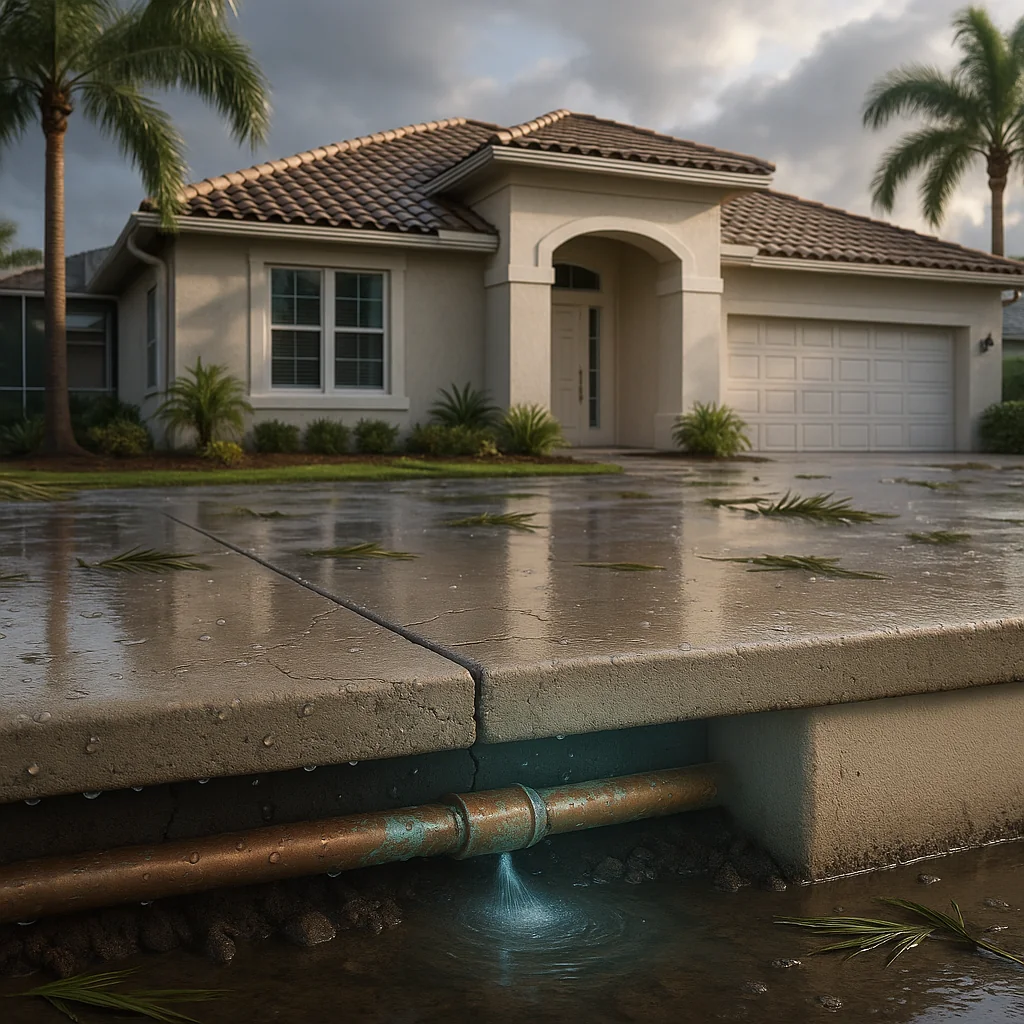
Post-Storm Slab Leak Risks in Naples and Collier County
After severe storms in Naples and Collier County heavy rainfall and flooding significantly increase the risk of post-storm slab leaks. These hidden water line breaks beneath concrete foundations can cause extensive damage if not addressed quickly. Naples Slab Leak Pros has responded to hundreds of storm-related slab leak emergencies throughout the region and understands the unique local soil and weather conditions that make these issues more likely after tropical rains.
Understanding Slab Leaks After Major Storms
In Southwest Florida storms bring not only high winds but also torrential downpours that saturate the ground. The sandy loam and limestone-based soils common in Collier County expand and contract dramatically with moisture changes. This movement stresses copper and polybutylene pipes running under concrete slabs. When the ground shifts pipes can crack or separate at joints leading to slab leaks. These leaks often go unnoticed until water appears on floors or utility bills spike dramatically.
The most vulnerable periods occur immediately after hurricanes tropical storms or even strong afternoon thunderstorms that dump several inches of rain in a short time. Naples experiences an average of 60 inches of rainfall annually with much of it concentrated in the summer and early fall months. This consistent wet-dry cycle creates ongoing stress on underground plumbing systems.
Why Naples and Collier County Are Particularly Vulnerable
The geology of Collier County plays a major role in post-storm slab leak frequency. The region sits atop a porous limestone aquifer with a high water table in many areas. After heavy storms the water table can rise dramatically putting additional pressure on pipes beneath homes. In neighborhoods built on former wetlands or filled land the soil composition creates even more movement.
Many homes in Royal Harbor and surrounding waterfront communities were constructed decades ago when plumbing materials and installation standards differed from today’s practices. Older copper pipes are especially susceptible to corrosion accelerated by the slightly acidic rainwater common in Florida. Newer communities face different challenges with poly pipes that can become brittle or separate at fittings during ground movement.
Common Signs of Post-Storm Slab Leaks
Homeowners should watch for several warning signs after major weather events. The most obvious is unexplained wet spots on floors or carpet that remain damp despite dry weather. You might also notice warm areas on the slab particularly near exterior walls or bathrooms. Sudden increases in water bills without increased usage often indicate a hidden leak.
Other indicators include:
- Cracks appearing in walls or floors after storms
- Musty odors or mold growth in specific areas
- Reduced water pressure in certain fixtures
- Foundation settling or uneven floors
- Hot spots on tile or concrete surfaces
In communities like Autumn Woods where homes are closely spaced one neighbor’s slab leak can sometimes affect adjacent properties through shared utility lines or soil saturation.
The Science Behind Storm-Induced Slab Leaks
When heavy rains saturate the soil around a home hydrostatic pressure builds beneath the foundation. This pressure can reach several pounds per square inch enough to stress pipes that were properly installed for normal conditions. The clay content in some Collier County soils causes significant expansion when wet creating lateral and vertical forces on plumbing lines.
Additionally storm winds can cause trees and large shrubs to sway dramatically. Root systems attached to these plants transmit that movement to the soil potentially shearing pipes. In areas with aggressive tree growth like many Naples subdivisions this root intrusion combined with soil movement creates perfect conditions for post-storm leaks.
Lightning strikes during thunderstorms can also affect underground pipes indirectly by causing power surges that damage pump systems or by heating metal pipes through electrical grounding connections. While rare these events have been documented in several Ave Maria and surrounding community homes.
High-Risk Areas in Collier County
Certain neighborhoods show higher rates of post-storm slab leaks due to their age soil composition proximity to water or construction history. Waterfront properties in Royal Harbor face unique challenges with tidal fluctuations adding to soil moisture variability. Inland communities built during the 1980s and 1990s boom often used materials that have reached the end of their service life.
The Bent Creek area with its mix of older and newer construction sees regular calls after major rain events. Similarly homes in Estero near the boundary with Lee County experience similar soil challenges where the transition between different geological zones creates additional stress points.
Newer developments aren’t immune either. Even homes built within the last decade can develop slab leaks after extreme weather if proper backfilling techniques weren’t followed or if the builder used lower-grade piping materials to cut costs.
Immediate Actions After a Major Storm
If you suspect a slab leak following a storm take these steps promptly:
- Document any visible water damage with photos for insurance purposes
- Turn off the main water supply if you notice significant flooding
- Avoid walking on wet carpet or flooring to prevent mold spread
- Contact a professional slab leak detection specialist rather than a general plumber
- Monitor your water meter for unexplained movement
Delaying professional assessment can turn a manageable repair into a major reconstruction project. Water traveling beneath slabs can erode soil creating voids that lead to foundation settling. In extreme cases this has required costly underpinning repairs in addition to pipe replacement.
Professional Detection Methods Used in Southwest Florida
Modern slab leak detection relies on several technologies particularly effective in Naples’ climate and construction styles. Acoustic listening devices can detect the sound of water escaping from pipes even through concrete. Thermal imaging cameras identify temperature differences caused by leaking water. Electronic leak detection uses specialized sensors to locate moisture without destructive testing.
At Naples Slab Leak Pros we often combine multiple methods for the most accurate diagnosis. This approach minimizes the need for exploratory digging or concrete cutting. In post-storm situations where multiple leaks might exist this comprehensive approach saves both time and money.
Repair Options for Storm-Damaged Slab Leaks
Once a leak is located several repair methods are available depending on the pipe type location and extent of damage. Traditional methods involve breaking through the concrete to access and replace the damaged section. While effective this creates significant disruption and requires careful matching of the original flooring.
Modern trenchless techniques have become increasingly popular in Collier County. Epoxy pipe coating can seal leaks from the inside in certain pipe types. Pipe rerouting involves creating new paths for plumbing lines through walls or attics avoiding the slab entirely. Each option has appropriate applications based on the specific situation.
The choice of repair method should consider not just the immediate fix but long-term durability in Florida’s challenging environment. Materials must resist both corrosion from soil chemistry and the physical stresses of our expansive soils.
Preventive Measures for Naples Homeowners
While you cannot prevent storms you can take steps to minimize slab leak risks:
- Schedule annual plumbing inspections especially before and after hurricane season
- Install pressure regulators if your water pressure exceeds 80 psi
- Address minor foundation settling promptly before it stresses pipes
- Consider upgrading older polybutylene or galvanized pipes proactively
- Maintain proper drainage around your foundation to reduce soil saturation
- Trim tree roots that approach your foundation too closely
In communities with known high water tables like parts of North Naples elevating water heaters and installing flood barriers can provide additional protection. Some homeowners opt for smart water monitoring systems that alert them to unusual usage patterns that might indicate a developing leak.
Insurance Considerations After Storm-Related Leaks
Many Naples homeowners are surprised to learn that standard homeowners insurance typically covers sudden and accidental water damage but may not cover gradual leaks or foundation repairs. The distinction between flood damage and plumbing leaks can become contentious after major storms.
Documenting the sudden nature of a post-storm leak is crucial. Professional leak detection reports that pinpoint the failure to recent soil movement or pressure changes can strengthen insurance claims. Working with restoration companies familiar with local insurance adjusters can also help expedite the claims process.
Consider adding water backup coverage or service line protection to your policy. These endorsements often cover the cost of locating and repairing slab leaks which can otherwise reach thousands of dollars even for relatively small repairs.
The Long-Term Impact of Untreated Slab Leaks
Beyond the immediate water damage untreated slab leaks can create cascading problems. Mold growth often begins within 24-48 hours in Florida’s humid environment. Structural damage to wooden subfloors or cabinetry can occur quickly. Perhaps most concerning is the potential for foundation damage as water erodes supporting soil.
In severe cases homes have become temporarily uninhabitable due to air quality issues from hidden mold. The financial impact extends beyond repair costs to include lost rental income temporary housing expenses and diminished property values if problems become known in the real estate market.
Local Climate Patterns and Slab Leak Seasonality
While storms can occur year-round in Collier County certain patterns increase risk during specific months. The peak hurricane season from June through November brings the heaviest rains and strongest winds. However even winter storms associated with cold fronts can deliver enough precipitation to trigger leaks in vulnerable systems.
The transition periods between dry and wet seasons create additional stress. After extended dry periods the first heavy rains of the season cause rapid soil expansion that catches many aging plumbing systems by surprise. Understanding these patterns helps homeowners remain vigilant during higher risk periods.
Choosing the Right Professional for Post-Storm Repairs
Not all plumbers have the specialized equipment and experience needed for accurate slab leak detection and repair. Look for companies that focus specifically on slab leak issues rather than general plumbing services. Local knowledge matters tremendously in Naples where soil conditions building practices and even municipal water chemistry affect repair decisions.
Experience with insurance claims documentation and the ability to coordinate with restoration teams when necessary are important factors. The best professionals will explain the detection process clearly and present multiple repair options with their respective pros and cons.
Case Studies from Recent Collier County Storms
Following Hurricane Ian many homeowners in affected areas discovered slab leaks that developed during the storm or in the weeks afterward as saturated ground began shifting. One Royal Harbor residence experienced three separate leaks triggered by the combination of storm surge and heavy rainfall. The early detection and appropriate rerouting solution prevented what could have been catastrophic foundation damage.
In Ave Maria a cluster of homes built around the same time showed similar failure patterns in their hot water lines after a particularly wet summer. The consistent approach to diagnosis and repair across these properties highlighted the value of understanding local construction history when addressing slab leak issues.
These real-world examples demonstrate that prompt professional intervention combined with appropriate repair techniques can restore homes to pre-storm condition while implementing solutions that prevent recurrence during future weather events.
Technological Advances in Slab Leak Prevention and Detection
The plumbing industry continues developing better tools for both detecting and preventing slab leaks in challenging environments like Southwest Florida. Fiber optic sensors can now be installed during new construction to provide continuous monitoring of moisture levels beneath slabs. Improved pipe materials with greater flexibility and corrosion resistance are becoming standard in newer communities.
For existing homes remote monitoring systems can detect pressure drops or unusual flow patterns that might indicate developing leaks. When combined with regular professional inspections these technologies help shift the focus from reactive repairs to proactive maintenance.
As climate patterns continue changing with more intense rainfall events these advancements become increasingly important for protecting Naples and Collier County homes from water damage.
Conclusion: Protecting Your Naples Home After Storms
Post-storm slab leaks represent a significant risk for homeowners throughout Naples and Collier County but knowledge and prompt action can minimize their impact. By understanding the local factors that contribute to these leaks recognizing the warning signs and working with experienced professionals you can protect your property from extensive damage.
Regular maintenance awareness of changing weather patterns and quality repairs using appropriate materials for our unique environment are the best defenses against the costly and disruptive effects of slab leaks. When storms approach or you notice potential warning signs after heavy rains don’t wait to seek professional evaluation. Early intervention is always the most cost-effective approach to maintaining the integrity of your home’s foundation and plumbing systems.
Leave a Reply